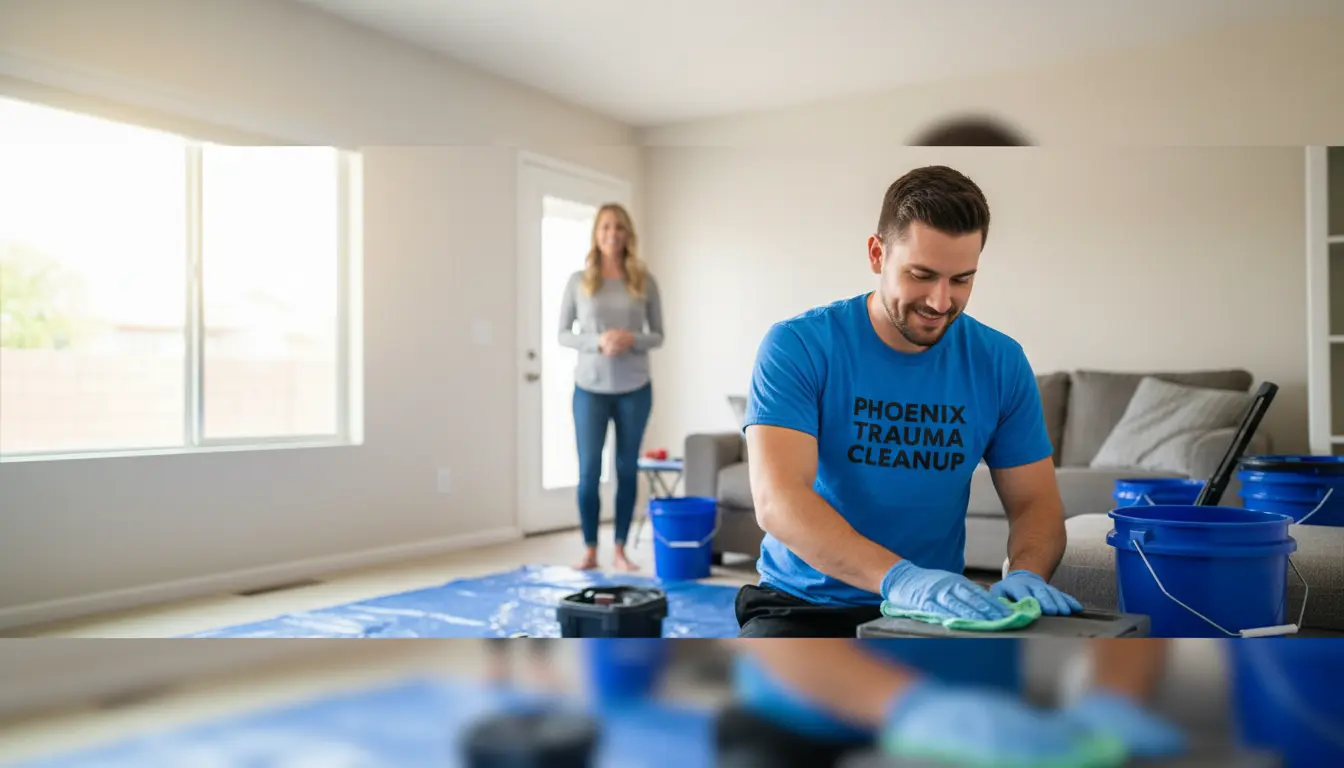
As a biohazard remediation specialist in Phoenix, I recall a particularly distressing scene where a family had to deal with the aftermath of an accident at home, resulting in significant blood spillage. The family was not only traumatized by the event but also faced the daunting task of cleaning up the blood safely to prevent any potential health risks. This experience highlighted the importance of handling blood cleanup safely after an accident at home, especially in areas like Phoenix, where the hot and dry climate can accelerate the decomposition process and increase the risk of infection.
The key to safe blood cleanup is understanding the risks associated with bloodborne pathogens and the need for professional, legally compliant trauma cleanup. Unlike standard cleaning, professional trauma cleanup involves specialized training, equipment, and protocols to ensure the complete removal of biohazards, preventing cross-contamination and future health risks. In Phoenix, Phoenix Trauma Cleanup is the premier service provider, offering discreet and authoritative biohazard remediation services that adhere to the highest standards of safety and compliance.
The process of handling blood cleanup safely after an accident at home requires careful planning, specialized equipment, and a thorough understanding of the risks involved. It is essential to approach the cleanup process with caution, wearing personal protective equipment (PPE) and following established protocols to prevent exposure to bloodborne pathogens. In areas like Phoenix, where the climate can exacerbate the risks associated with blood cleanup, it is crucial to work with a professional biohazard remediation service that understands the local conditions and can provide effective solutions.
Technical Process of Blood Cleanup
The technical process of blood cleanup involves several critical steps, including initial site assessment, establishing containment zones, biohazard removal, deep sanitization, ATP verification, and final deodorization. Each step requires specialized training, equipment, and attention to detail to ensure the complete removal of biohazards and prevention of cross-contamination. For example, the use of HEPA air scrubbers and hydroxyl generators can help remove airborne pathogens and eliminate odors at the molecular level.
In Phoenix, the extreme climate conditions require specialized equipment and protocols to ensure effective blood cleanup. The use of ULV foggers, for instance, can help distribute disinfectants evenly and reach areas that are difficult to access. Additionally, the hot and dry climate can accelerate the decomposition process, making it essential to work quickly and efficiently to prevent the spread of infection. By understanding the local conditions and using the right equipment and protocols, Phoenix Trauma Cleanup can provide effective and safe blood cleanup services in Phoenix.
Data Comparison Table
When it comes to blood cleanup, it is essential to understand the differences between professional biohazard remediation and standard DIY or janitorial cleaning. The following table highlights the key differences between these two approaches:
| Feature/Metric | Professional Remediation | DIY/Standard Cleaning |
|---|---|---|
| Pathogen Eradication | 99.99% eradication of bloodborne pathogens | Limited eradication, potentially leaving behind infectious pathogens |
| Odor Elimination | Complete elimination of odors at the molecular level | Temporary masking of odors, potentially leading to future resurgence |
| Legal/Disposal Compliance | Full compliance with OSHA and EPA regulations | Potential non-compliance, leading to legal and financial repercussions |
Source: OSHA Bloodborne Pathogens Standard
Expert Insights
As a certified biohazard and trauma scene cleanup expert, I can provide several advanced professional tips for handling blood cleanup safely. Firstly, it is essential to prioritize porous material disposal, as these materials can harbor infectious pathogens and create future health risks. Secondly, proper containment strategies are critical to preventing cross-contamination and ensuring the safe removal of biohazards. Finally, structural fluid inspection is necessary to identify and address any potential subsurface fluid seepage, which can lead to severe odor resurgence or lingering infectious pathogens.
Common mistakes property owners make when handling blood cleanup include using household bleach on biological fluids, failing to locate subsurface fluid seepage, and not following established protocols for biohazard removal. These mistakes can have severe consequences, including the spread of infection, lingering odors, and potential legal and financial repercussions. By working with a professional biohazard remediation service like Phoenix Trauma Cleanup, property owners can ensure safe and effective blood cleanup, preventing future health risks and protecting their property values.
Pricing and Cost Factors
The cost of blood cleanup services can vary depending on several factors, including the severity of fluid penetration, the volume of regulated medical waste disposal, and the required structural tear-out and reconstruction prep. In general, professional biohazard remediation services can range from $500 to $5,000 or more, depending on the scope of the project. It is essential to work with a reputable and transparent service provider like Phoenix Trauma Cleanup, which can provide clear and detailed pricing information and ensure that all costs are accounted for upfront.
Some of the key cost factors to consider when hiring a professional biohazard remediation service include:
- Hourly remediation rates, which can range from $100 to $500 per hour, depending on the service provider and the scope of the project
- Per-room base fees, which can range from $500 to $2,000 per room, depending on the size of the room and the severity of the contamination
- Specialized bio-waste disposal fees, which can range from $100 to $1,000 or more, depending on the volume and type of waste disposed of
Safety and Standards
When it comes to blood cleanup, safety and standards are paramount. Professional biohazard remediation services like Phoenix Trauma Cleanup adhere to the highest standards of safety and compliance, following established protocols and guidelines set by OSHA, EPA, and other regulatory agencies. This includes the use of EPA-registered, hospital-grade disinfectants, personal protective equipment (PPE), and specialized equipment designed to remove airborne pathogens and eliminate odors at the molecular level.
By working with a reputable and compliant service provider, property owners can ensure that their blood cleanup needs are met safely and effectively, preventing future health risks and protecting their property values. It is essential to prioritize safety and standards when handling blood cleanup, as the risks associated with bloodborne pathogens and other biohazards can be severe and long-lasting.
Frequently Asked Questions
What is the difference between professional biohazard remediation and standard DIY or janitorial cleaning?
Professional biohazard remediation involves specialized training, equipment, and protocols to ensure the complete removal of biohazards, preventing cross-contamination and future health risks. Standard DIY or janitorial cleaning, on the other hand, may not provide the same level of safety and efficacy, potentially leaving behind infectious pathogens and creating future health risks.
How long does the blood cleanup process typically take?
The length of time required for blood cleanup can vary depending on the severity of the contamination, the size of the affected area, and the complexity of the cleanup process. In general, professional biohazard remediation services can take anywhere from a few hours to several days or even weeks to complete, depending on the scope of the project.
What are the risks associated with bloodborne pathogens?
Bloodborne pathogens, including viruses and bacteria, can cause a range of serious health problems, including HIV, hepatitis, and other infectious diseases. These pathogens can be transmitted through contact with contaminated blood or other bodily fluids, making it essential to prioritize safety and follow established protocols when handling blood cleanup.
Can I handle blood cleanup myself, or do I need to hire a professional service provider?
While it may be tempting to handle blood cleanup yourself, it is generally recommended to hire a professional service provider like Phoenix Trauma Cleanup. These services have the specialized training, equipment, and expertise necessary to ensure safe and effective blood cleanup, preventing future health risks and protecting property values.
Professional Trauma Cleanup in Phoenix, Arizona
In conclusion, handling blood cleanup safely after an accident at home requires careful planning, specialized equipment, and a thorough understanding of the risks involved. By working with a reputable and compliant service provider like Phoenix Trauma Cleanup, property owners in Phoenix, Arizona can ensure safe and effective blood cleanup, preventing future health risks and protecting their property values. With years of experience and a commitment to safety and standards, Phoenix Trauma Cleanup is the premier choice for biohazard remediation services in Phoenix, Arizona.
For more information on our services and how we can help with your blood cleanup needs, please visit our website at https://phoenixtraumacleanup.com/ or contact us directly at (602) 848-8711. We are dedicated to providing compassionate, highly-trained, and legally compliant biohazard remediation services to families and businesses in Phoenix, Arizona, and we look forward to serving you.