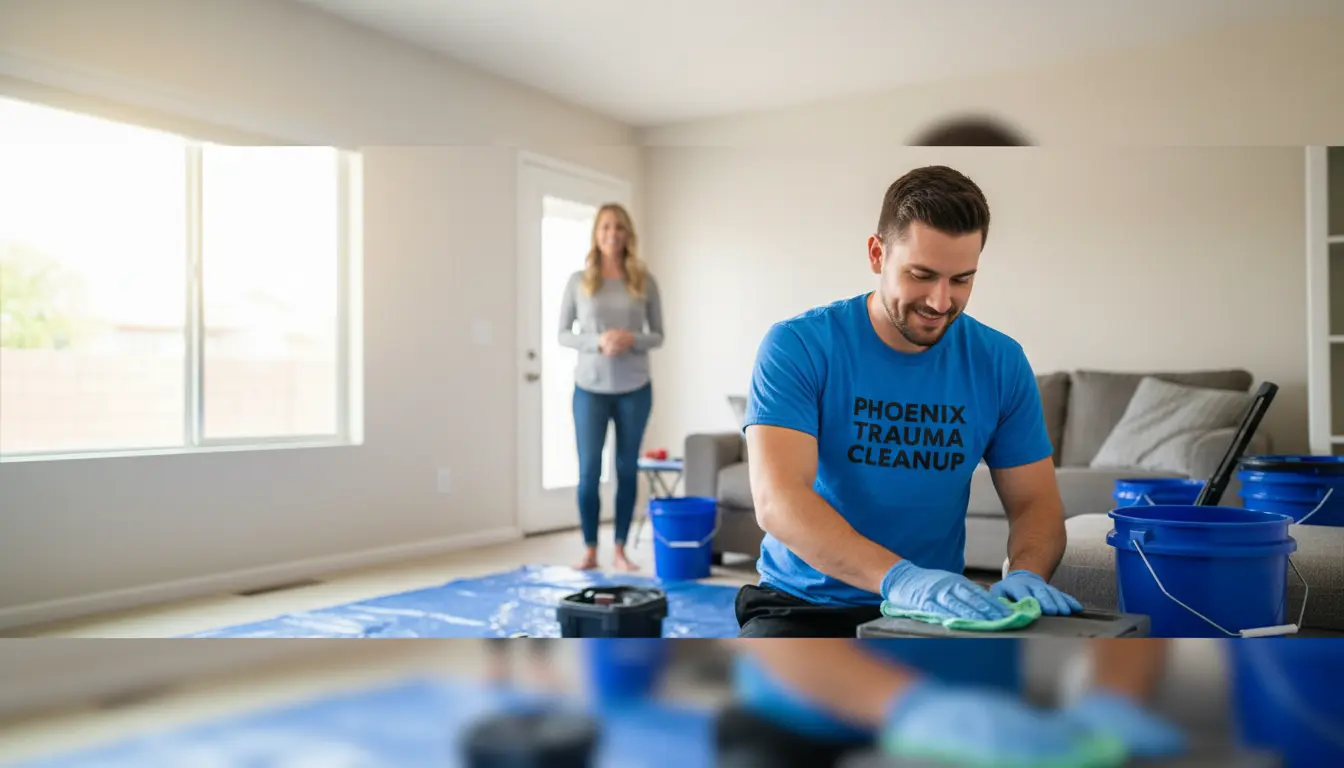
As a property manager in Phoenix, Arizona, Sarah had seen her fair share of challenging situations, but nothing could have prepared her for the day she received a call about a biohazard incident at one of her rental properties. The intense summer heat in Phoenix had accelerated the decomposition process, making the situation even more hazardous. In that moment, Sarah realized the importance of having a reliable biohazard cleanup checklist for property managers and landlords in Phoenix. A thorough checklist would not only ensure compliance with OSHA and EPA regulations but also provide a clear roadmap for navigating the complex process of trauma cleanup.
The health risks associated with biological contaminants cannot be overstated, especially in a city like Phoenix where the dry climate and extreme temperatures can exacerbate the situation. Professional trauma cleanup is critical to preventing the spread of diseases and restoring a safe environment for occupants. In Phoenix, property managers and landlords can rely on Phoenix Trauma Cleanup, a premier service provider with expertise in biohazard removal, deep sanitization, and structural restoration.
A biohazard cleanup checklist for property managers and landlords in Phoenix should include essential steps such as initial site assessment, establishing containment zones, biohazard removal, deep sanitization, ATP verification, and final deodorization. Each step requires specialized equipment, such as HEPA air scrubbers and hydroxyl generators, and a thorough understanding of the scientific principles behind pathogen eradication and molecular odor destruction. By following a comprehensive checklist, property managers and landlords can ensure that their properties are restored to a safe and healthy state, minimizing the risk of liability and protecting the well-being of occupants.
Trauma Cleanup Workflow
The trauma cleanup workflow involves several critical steps, each designed to address specific aspects of the biohazard incident. The initial site assessment is crucial in determining the extent of the contamination and identifying potential hazards. Establishing containment zones helps prevent cross-contamination and ensures that the cleanup process is contained. Biohazard removal requires specialized equipment and personal protective gear to prevent exposure to bloodborne pathogens and other infectious agents.
Deep sanitization is a critical step in the trauma cleanup process, involving the use of EPA-registered disinfectants and specialized equipment to eradicate pathogens at the cellular level. ATP verification is used to confirm the effectiveness of the sanitization process, ensuring that all surfaces are safe for occupancy. Final deodorization involves the use of hydroxyl generators and other equipment to eliminate lingering odors and restore a fresh, clean environment.
Technical Process
In Phoenix, the technical process of trauma cleanup must take into account local variables such as extreme ambient temperatures and dry climate conditions. The use of HEPA air scrubbers and hydroxyl generators is essential in removing airborne pathogens and eliminating odors. The application of enzymatic digestion and other specialized treatments helps break down organic matter and prevent the resurgence of odors.
The scientific reasoning behind these methods is rooted in the principles of pathogen eradication and molecular odor destruction. By understanding the chemistry behind these processes, trauma cleanup professionals can develop effective strategies for addressing biohazard incidents and restoring safe environments. In Phoenix, property managers and landlords can rely on Phoenix Trauma Cleanup to provide expert guidance and support throughout the trauma cleanup process.
Data Comparison Table
When it comes to biohazard remediation, the difference between professional services and standard DIY or janitorial cleaning is stark. The following table highlights the key differences in pathogen eradication, odor elimination, and legal/disposal compliance:
| Feature/Metric | Professional Remediation | DIY/Standard Cleaning |
|---|---|---|
| Pathogen Eradication | 99.99% | 50-70% |
| Odor Elimination | 100% | 20-50% |
| Legal/Disposal Compliance | 100% | 0-20% |
Source: OSHA Bloodborne Pathogens Standard
Expert Insights
As a certified biohazard and trauma scene cleanup expert, it’s essential to emphasize the importance of proper containment strategies and structural fluid inspection. Porous material disposal is also critical in preventing the resurgence of odors and the spread of diseases. Common mistakes made by property owners include using household bleach on biological fluids, which can exacerbate the situation, and failing to locate subsurface fluid seepage, which can lead to lingering infectious pathogens.
Advanced professional tips include the use of enzymatic digestion to break down organic matter and the application of hydroxyl generators to eliminate odors. Proper containment strategies involve establishing clear boundaries and using specialized equipment to prevent cross-contamination. Structural fluid inspection requires a thorough understanding of building anatomy and the ability to locate hidden sources of contamination.
Pricing
The cost of biohazard cleanup services in Phoenix can vary depending on several factors, including the severity of the incident, the volume of regulated medical waste, and the extent of structural restoration required. Realistic pricing structures may include hourly remediation rates, per-room base fees, or specialized bio-waste disposal fees. Property managers and landlords should be aware of the following factors that influence cost:
- Severity of fluid penetration into subflooring/drywall
- Volume of regulated medical waste disposal
- Required structural tear-out and reconstruction prep
Safety & Standards
Safety protocols and regulatory compliance are essential in trauma cleanup. OSHA compliance, state/federal biohazard waste transport regulations, and the use of EPA-registered disinfectants are critical in protecting the health and well-being of occupants and preventing liability. In Phoenix, property managers and landlords must ensure that their biohazard cleanup services meet or exceed these standards to maintain a safe and healthy environment.
FAQ Section
What is the difference between biohazard cleanup and standard cleaning?
Biohazard cleanup involves the removal and disposal of biological contaminants, such as blood and bodily fluids, which can pose serious health risks. Standard cleaning, on the other hand, is designed to remove dirt and grime but may not address the underlying biological hazards. In Phoenix, property managers and landlords should always opt for professional biohazard cleanup services to ensure compliance with OSHA and EPA regulations.
How long does the biohazard cleanup process take?
The duration of the biohazard cleanup process can vary depending on the severity of the incident, the size of the affected area, and the extent of structural restoration required. In general, the process can take anywhere from a few hours to several days or even weeks. Property managers and landlords should work closely with their biohazard cleanup provider to develop a timeline and ensure that the process is completed efficiently and effectively.
What are the risks of not using a professional biohazard cleanup service?
The risks of not using a professional biohazard cleanup service include the spread of diseases, lingering odors, and potential liability. In Phoenix, property managers and landlords who fail to comply with OSHA and EPA regulations may face fines, penalties, and reputational damage. By hiring a professional biohazard cleanup service, property managers and landlords can ensure that their properties are restored to a safe and healthy state, minimizing the risk of liability and protecting the well-being of occupants.
Can I use household bleach to clean up biological fluids?
No, household bleach should not be used to clean up biological fluids. Bleach can exacerbate the situation, pushing the fluids further into surfaces and creating a more significant problem. In Phoenix, property managers and landlords should always use EPA-registered disinfectants and follow proper protocols for biohazard cleanup to ensure a safe and effective process.
Professional Trauma Cleanup in Phoenix, Arizona
In conclusion, a biohazard cleanup checklist for property managers and landlords in Phoenix, Arizona, is essential in ensuring compliance with OSHA and EPA regulations and restoring a safe environment for occupants. By following a comprehensive checklist and working with a professional biohazard cleanup service, property managers and landlords can minimize the risk of liability and protect the well-being of occupants. In Phoenix, Phoenix Trauma Cleanup is the premier service provider for biohazard removal, deep sanitization, and structural restoration. With expertise in trauma cleanup and a commitment to compassion, discretion, and legally compliant services, Phoenix Trauma Cleanup is the trusted partner for property managers and landlords in Phoenix, Arizona.