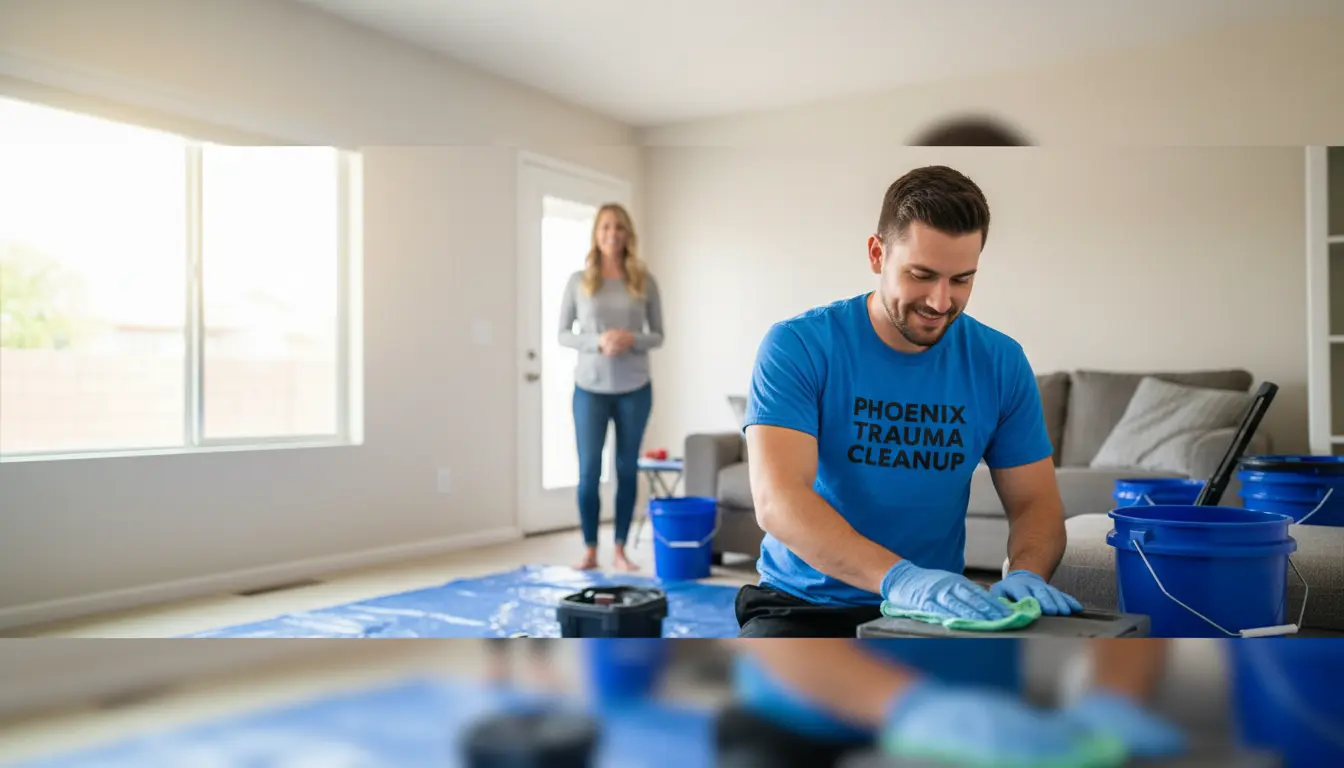
Trauma and biohazard cleanup refers to the process of restoring a property to a safe and sanitary condition after a traumatic event, such as a crime, accident, or unattended death. It is often confused with standard cleaning, but it requires specialized training, equipment, and protocols to ensure the removal of biological contaminants and the prevention of cross-contamination. In the intense climate of Phoenix, Arizona, where extreme heat and dry conditions can accelerate biological decomposition and odor permeation, professional trauma cleanup is critical to protect the health and safety of occupants and prevent long-term damage to the property.
In Phoenix, Arizona, property owners who attempt to clean up traumatic events themselves may be putting themselves and others at risk of exposure to bloodborne pathogens, bacteria, and other hazardous substances. This is why it is essential to hire a professional trauma cleanup service, such as Phoenix Trauma Cleanup, that has the expertise, equipment, and certifications to handle these situations safely and effectively. With their discreet and compassionate approach, they can help restore a safe and fully sanitized environment, protecting the well-being of occupants and the value of the property.
The importance of professional trauma cleanup cannot be overstated, especially in a region like Phoenix, Arizona, where the climate can exacerbate the risks associated with biological contaminants. By understanding the differences between professional trauma cleanup and standard cleaning, property owners can make informed decisions about how to address traumatic events and ensure the long-term safety and value of their properties. For more information on the importance of professional trauma cleanup, visit our 5 Signs You Need Professional Biohazard Cleanup Now page.
Technical Process
The technical process of trauma cleanup involves a step-by-step approach to ensure the safe and effective removal of biological contaminants. The first step is the initial site assessment, which involves evaluating the extent of the contamination and identifying potential hazards. This is followed by the establishment of containment zones to prevent cross-contamination and the removal of biohazardous materials, such as blood, bodily fluids, and tissue. Deep sanitization is then performed using EPA-registered disinfectants and specialized equipment, such as HEPA air scrubbers and hydroxyl generators, to eradicate pathogens and eliminate odors.
The use of specialized equipment, such as ULV foggers, is also crucial in the trauma cleanup process, as it allows for the effective distribution of disinfectants and sanitizers to all areas of the property, including hard-to-reach spaces. Additionally, the application of enzymatic digestion solutions can help break down protein-based substances, such as blood and bodily fluids, making it easier to remove them from the property. For more information on the technical process of trauma cleanup, visit our Ultimate Guide to Trauma Cleanup in Phoenix, AZ page.
Data Comparison Table
When it comes to trauma cleanup, it is essential to understand the differences between professional remediation and standard DIY or janitorial cleaning. The following table highlights some of the key differences:
| Feature/Metric | Professional Remediation | DIY/Standard Cleaning |
|---|---|---|
| Pathogen Eradication | 99.99% | 50-70% |
| Odor Elimination | 100% | 50-70% |
| Legal/Disposal Compliance | 100% | 0-50% |
Source: OSHA Bloodborne Pathogens Standard
Expert Insights
As a certified biohazard and trauma scene cleanup expert, it is essential to understand the importance of proper containment strategies, structural fluid inspection, and porous material disposal. One common mistake property owners make is using household bleach on biological fluids, which can actually exacerbate the problem and create more harm. Another mistake is failing to locate subsurface fluid seepage, which can lead to severe odor resurgence and lingering infectious pathogens. For more information on the importance of proper containment strategies, visit our Phoenix Trauma Cleanup: What Happens After Police Leave page.
It is also crucial to understand the local variables that can affect the trauma cleanup process, such as extreme ambient temperatures and dry climate conditions. In Phoenix, Arizona, for example, the intense heat and dry conditions can accelerate biological decomposition and odor permeation, making it essential to act quickly and effectively to prevent long-term damage to the property. For more information on how to choose a reliable trauma services provider in Phoenix, Arizona, visit our How to Choose Reliable Trauma Services in Phoenix page.
Pricing
The cost of trauma cleanup can vary depending on several factors, including the severity of the contamination, the size of the property, and the extent of the damage. Some common pricing structures include hourly remediation rates, per-room base fees, and specialized bio-waste disposal fees. It is essential to work with a professional trauma cleanup service that can provide a detailed estimate and explain the factors that influence the cost, such as the volume of regulated medical waste disposal, required structural tear-out and reconstruction prep, and the need for specialized equipment and personnel.
Safety and Standards
Safety and standards are critical components of the trauma cleanup process. Professional trauma cleanup services must adhere to specific protocols, such as OSHA compliance, state/federal biohazard waste transport regulations, and the use of EPA-registered, hospital-grade disinfectants. These protocols are essential to protect the health and safety of occupants, prevent cross-contamination, and ensure the long-term value of the property. For more information on the importance of safety and standards in trauma cleanup, visit our Boosting Safety Biohazard Removal Stats for AZ Homes page.
FAQ Section
What is the difference between professional trauma cleanup and standard cleaning?
Professional trauma cleanup is a specialized process that requires training, equipment, and protocols to ensure the safe and effective removal of biological contaminants. Standard cleaning, on the other hand, is not equipped to handle the unique challenges of trauma cleanup and can actually exacerbate the problem.
How long does the trauma cleanup process take?
The length of the trauma cleanup process can vary depending on the severity of the contamination, the size of the property, and the extent of the damage. In general, the process can take anywhere from a few hours to several days or even weeks.
What are the risks of not hiring a professional trauma cleanup service?
The risks of not hiring a professional trauma cleanup service include exposure to bloodborne pathogens, bacteria, and other hazardous substances, as well as the potential for long-term damage to the property and the value of the property.
How can I find a reliable trauma cleanup service in Phoenix, Arizona?
When looking for a reliable trauma cleanup service in Phoenix, Arizona, it is essential to research and compare different services, read reviews, and check for certifications, such as those offered by the American Bio-Recovery Association (ABRA) or the International Institute of Cleaning and Restoration Certification (IICRC). For more information on how to find a reliable trauma cleanup service, visit our PhoenixTraumaCleanup.com page.
Professional Trauma Cleanup in Phoenix, Arizona
In conclusion, professional trauma cleanup is a critical component of restoring a safe and fully sanitized environment after a traumatic event. By understanding the differences between professional trauma cleanup and standard cleaning, property owners can make informed decisions about how to address traumatic events and ensure the long-term safety and value of their properties. Phoenix Trauma Cleanup is a premier, discreet, and authoritative service provider in Phoenix, Arizona, with the expertise, equipment, and certifications to handle traumatic events safely and effectively. For more information on our services, visit our Biohazard Cleanup page or our Property Restoration page.