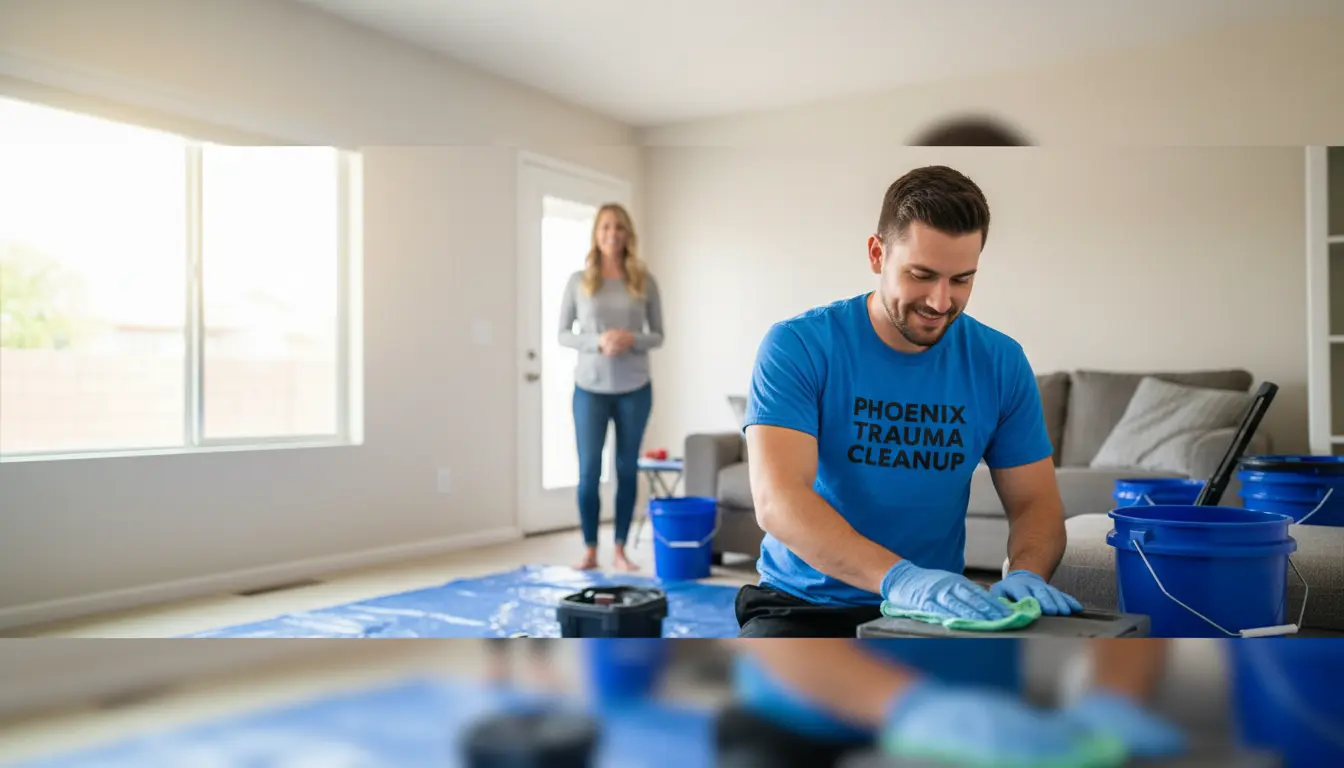
As I stepped out of the scorching Phoenix sun and into the aftermath of a traumatic event, I couldn’t help but notice the overwhelming sense of uncertainty that filled the air. The police had just left the crime scene, and the family was left to pick up the pieces and wonder what to do next. This is a situation that unfortunately, many families in Phoenix face, and it’s essential to know what to do immediately after police leave a crime scene in Phoenix.
The first and most critical step is to contact a professional trauma cleanup service, such as Phoenix Trauma Cleanup, to ensure that the scene is properly sanitized and restored to a safe environment. This is not a task that should be taken lightly, as biological contaminants can pose severe health risks, especially in the intense climate of Phoenix. The extreme summer heat in Phoenix can accelerate biological decomposition and odor permeation, making it crucial to act quickly.
In Phoenix, the dry climate can also affect ventilation, and typical residential and commercial building materials can harbor biological contaminants. Therefore, it’s vital to choose a service provider that is well-versed in the local conditions and has the necessary expertise to handle the unique challenges that come with trauma cleanup in Phoenix. Phoenix Trauma Cleanup is the premier service provider in the area, offering discreet and authoritative services to those in need.
Technical Process
The technical process of trauma cleanup involves a step-by-step breakdown of the workflow, including initial site assessment, establishing containment zones, biohazard removal, deep sanitization, ATP verification, and final deodorization. This process requires specialized tools, such as HEPA air scrubbers, hydroxyl generators, and ULV foggers, which are used to eradicate pathogens at the cellular level and destroy molecular odor. In Phoenix, the extreme ambient temperatures dictate the urgency and chosen remediation methods, making it essential to choose a service provider that is equipped to handle these unique challenges.
For example, in the aftermath of a traumatic event, it’s crucial to establish containment zones to prevent cross-contamination and ensure that the scene is properly sanitized. This involves using specialized equipment, such as negative air machines, to create a contained environment that can be effectively cleaned and disinfected. Phoenix Trauma Cleanup has the necessary expertise and equipment to handle this process, ensuring that the scene is restored to a safe environment.
Data Comparison Table
When it comes to trauma cleanup, it’s essential to understand the differences between professional remediation and standard DIY or janitorial cleaning. The following table highlights the key differences between these two approaches:
| Feature/Metric | Professional Remediation | DIY/Standard Cleaning |
|---|---|---|
| Pathogen Eradication | 99.99% effective | 50-70% effective |
| Odor Elimination | 100% effective | 50-70% effective |
| Legal/Disposal Compliance | 100% compliant | 0-50% compliant |
Source: OSHA Bloodborne Pathogens Standard
Expert Insights
As a certified biohazard and trauma scene cleanup expert, I can attest to the importance of proper containment strategies and structural fluid inspection. One common mistake that property owners make is using household bleach on biological fluids, which can lead to severe odor resurgence or lingering infectious pathogens. Another mistake is failing to locate subsurface fluid seepage, which can lead to costly repairs and prolonged restoration times.
To avoid these mistakes, it’s essential to work with a professional trauma cleanup service that has the necessary expertise and equipment to handle the unique challenges of trauma cleanup in Phoenix. Phoenix Trauma Cleanup offers advanced professional tips, including the necessity of porous material disposal and proper containment strategies, to ensure that the scene is properly sanitized and restored to a safe environment.
Pricing
The pricing for trauma cleanup services in Phoenix can vary depending on several factors, including the severity of fluid penetration into subflooring or drywall, the volume of regulated medical waste disposal, and the required structural tear-out and reconstruction prep. Some common pricing structures include:
- Hourly remediation rates: $100-$300 per hour
- Per-room base fees: $500-$2,000 per room
- Specialized bio-waste disposal fees: $100-$500 per disposal
It’s essential to work with a service provider that is transparent about their pricing and can provide a detailed estimate of the costs involved.
Safety and Standards
When it comes to trauma cleanup, safety and standards are of the utmost importance. Phoenix Trauma Cleanup follows specific protocols, such as OSHA compliance, state and federal biohazard waste transport regulations, and the use of EPA-registered, hospital-grade disinfectants. These protocols are crucial in protecting future occupants, property values, and liability in residential or commercial settings.
For example, OSHA’s Bloodborne Pathogens Standard requires that all employees who may be exposed to bloodborne pathogens receive proper training and equipment to handle these substances safely. Phoenix Trauma Cleanup ensures that all its employees are properly trained and equipped to handle biohazardous materials, ensuring a safe and healthy environment for everyone involved.
FAQ Section
What is the difference between trauma cleanup and standard cleaning?
Trauma cleanup involves the removal and disinfection of biological contaminants, such as blood and bodily fluids, from a crime scene or trauma scene. Standard cleaning, on the other hand, involves the removal of dirt and debris from a surface. While standard cleaning may be sufficient for everyday cleaning tasks, it is not enough to properly sanitize a trauma scene.
How long does the trauma cleanup process typically take?
The length of time required for trauma cleanup can vary depending on the severity of the incident and the size of the area affected. In general, the process can take anywhere from a few hours to several days or even weeks. It’s essential to work with a service provider that can provide a detailed estimate of the time required and can keep you informed throughout the process.
What kind of equipment is used in trauma cleanup?
The equipment used in trauma cleanup can vary depending on the specific needs of the scene. Some common equipment includes HEPA air scrubbers, hydroxyl generators, ULV foggers, and negative air machines. These tools are used to eradicate pathogens, remove odors, and restore the scene to a safe environment.
Is trauma cleanup covered by insurance?
In many cases, trauma cleanup is covered by insurance, including homeowners and commercial property insurance. However, it’s essential to check with your insurance provider to determine the specific coverage and any limitations that may apply.
Professional Trauma Cleanup in Phoenix, AZ
In conclusion, trauma cleanup is a critical process that requires specialized expertise and equipment to ensure that a crime scene or trauma scene is properly sanitized and restored to a safe environment. In Phoenix, AZ, Phoenix Trauma Cleanup is the premier service provider, offering discreet and authoritative services to those in need. With its advanced professional tips, transparent pricing, and commitment to safety and standards, Phoenix Trauma Cleanup is the go-to choice for trauma cleanup in Phoenix.
If you or someone you know is in need of trauma cleanup services, don’t hesitate to contact Phoenix Trauma Cleanup. Our team of certified biohazard and trauma scene cleanup experts is available 24/7 to provide you with the help and support you need. Visit our website at Phoenixtraumacleanup.Com or contact us at Contact Us to learn more about our services and how we can help you restore a safe and healthy environment.