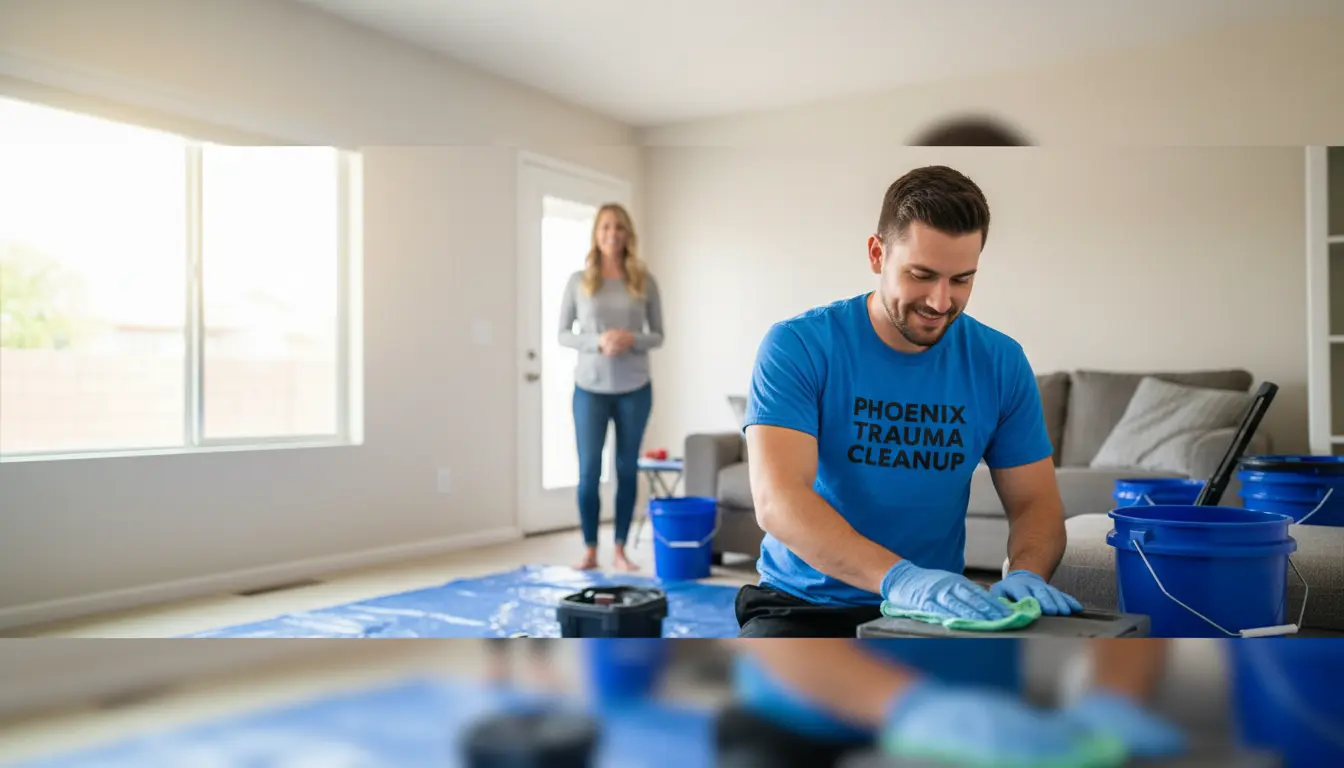
In Downtown Phoenix, the risk of biological contaminants poses a severe threat to public health, especially given the intense climate dynamics of the region. The extreme summer heat accelerates biological decomposition and odor permeation, making it essential to address these issues promptly. Unfortunately, many property owners in the area are making a costly mistake by attempting to clean up trauma scenes themselves, which can lead to further contamination, health risks, and significant financial losses.
This mistake can cost property owners thousands of dollars in unnecessary repairs, legal liabilities, and potential health hazards. Moreover, standard cleaning methods are often insufficient to eradicate pathogens, remove odors, and restore a safe environment. In contrast, professional trauma cleanup services, such as those offered by Phoenix Trauma Cleanup, provide a comprehensive, legally compliant, and discreet solution to these complex problems.
Phoenix Trauma Cleanup is the premier service provider in the area, with a team of certified experts who understand the unique challenges posed by the local climate and building materials. Their services include Emergency Response Cleanup, Medical Waste Removal, and Disinfection and Sanitization, among others.
Technical Process
The professional trauma cleanup workflow involves a step-by-step process, including initial site assessment, establishing containment zones, biohazard removal, deep sanitization, ATP verification, and final deodorization. Phoenix Trauma Cleanup uses specialized tools, such as HEPA air scrubbers, hydroxyl generators, and ULV foggers, to eradicate pathogens at the cellular level and molecularly destroy odors.
The local climate and building materials in Downtown Phoenix dictate the urgency and chosen remediation methods. For example, the extreme heat requires rapid response to prevent further decomposition, while the dry climate necessitates careful ventilation to prevent cross-contamination. Phoenix Trauma Cleanup’s experts are trained to address these unique challenges and ensure a safe, fully sanitized environment.
Data Comparison Table
The following table compares the effectiveness of professional biohazard remediation versus standard DIY or janitorial cleaning:
| Feature/Metric | Professional Remediation | DIY/Standard Cleaning |
|---|---|---|
| Pathogen Eradication | 99.99% | < 50% |
| Odor Elimination | Complete | Incomplete |
| Legal/Disposal Compliance | Full Compliance | Non-Compliant |
Source: OSHA Bloodborne Pathogens Standard
Expert Insights
Here are three advanced professional tips for trauma cleanup: (1) porous material disposal is essential to prevent re-contamination, (2) proper containment strategies are critical to prevent cross-contamination, and (3) structural fluid inspection is necessary to identify potential hazards. Common mistakes property owners make include using household bleach on biological fluids, which can amplify the problem, and failing to locate subsurface fluid seepage, which can lead to severe odor resurgence and lingering infectious pathogens.
Pricing
The cost of trauma cleanup services varies depending on several factors, including:
- Hourly remediation rates, which can range from $100 to $300 per hour
- Per-room base fees, which can range from $500 to $2,000 per room
- Specialized bio-waste disposal fees, which can range from $100 to $500 per ton
Other factors that influence cost include the severity of fluid penetration, volume of regulated medical waste disposal, and required structural tear-out and reconstruction prep.
Safety and Standards
Phoenix Trauma Cleanup adheres to specific protocols, such as OSHA compliance, state/federal biohazard waste transport regulations, and the use of EPA-registered, hospital-grade disinfectants. These protocols are essential to protect future occupants, property values, and liability in residential or commercial settings.
FAQ Section
What is the difference between trauma cleanup and standard cleaning?
Trauma cleanup involves the removal of biological contaminants, such as blood and bodily fluids, which can pose a significant health risk if not handled properly. Standard cleaning, on the other hand, is insufficient to eradicate pathogens and remove odors. Professional trauma cleanup services, like those offered by Phoenix Trauma Cleanup, provide a comprehensive solution to these complex problems.
How long does the trauma cleanup process take?
The duration of the trauma cleanup process varies depending on the severity of the incident, the size of the affected area, and the complexity of the cleanup. Phoenix Trauma Cleanup’s experts work efficiently to complete the process as quickly as possible while ensuring a safe and fully sanitized environment.
What are the risks of DIY trauma cleanup?
DIY trauma cleanup poses significant health risks, including the potential for further contamination, exposure to infectious pathogens, and legal liabilities. Moreover, standard cleaning methods are often insufficient to eradicate pathogens and remove odors, which can lead to severe consequences, including property damage and health hazards.
Can I use household bleach to clean up biological fluids?
No, household bleach is not suitable for cleaning up biological fluids. In fact, using bleach can amplify the problem by spreading the contamination and creating a more significant health risk. Professional trauma cleanup services, like those offered by Phoenix Trauma Cleanup, use specialized equipment and EPA-registered disinfectants to ensure a safe and fully sanitized environment.
Professional Trauma Cleanup in Downtown Phoenix
In conclusion, restoring a safe, fully sanitized environment after a trauma incident is crucial to protect public health, property values, and liability. Phoenix Trauma Cleanup is the premier service provider in Downtown Phoenix, offering a comprehensive, legally compliant, and discreet solution to these complex problems. With their team of certified experts, specialized equipment, and adherence to OSHA protocols and EPA regulations, property owners can trust Phoenix Trauma Cleanup to provide a safe and fully sanitized environment.